
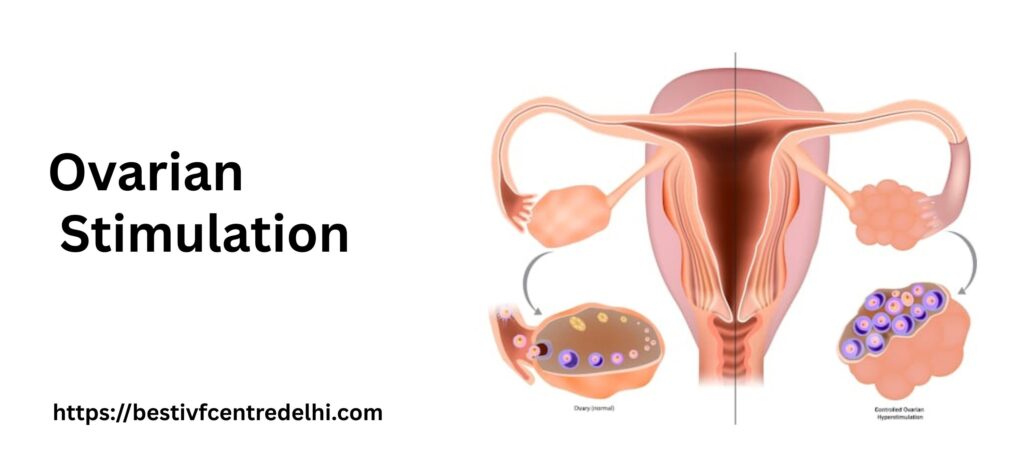
Ovarian stimulation (also called controlled ovarian hyperstimulation) is the IVF phase where fertility medications are given to stimulate the ovaries to produce multiple eggs instead of the single egg a woman typically produces each month.
Why Is Ovarian Stimulation Needed in IVF?
- Increases the number of eggs retrieved
- Provides more embryos for fertilization
- Improves embryo selection and success rates
- Supports advanced techniques like blastocyst culture & PGT
- Reduces the chances of cycle cancellation
Goal: Produce 8–15 mature eggs, depending on age, AMH, and ovarian reserve.
How Ovarian Stimulation Works: Step-by-Step
1. Pre-Stimulation Assessment
Before starting injections, the IVF doctor conducts:
- AMH blood test
- Antral follicle count (AFC) via ultrasound
- Hormonal profiling (FSH, LH, E2)
- Medical history review
These tests help create a personalized stimulation plan.
2. Start of Hormonal Injections (Day 2 or 3 of Period)
Ovarian stimulation generally begins on Day 2 or Day 3 of the menstrual cycle.
Common medications used:
- FSH injections (Gonal-F, Follistim)
- hMG (Menopur, HMG HP)
- Recombinant FSH
These injections stimulate multiple follicles to grow.
3. Follicle Monitoring (Every 2–3 Days)
Ultrasound + blood test monitoring helps track:
- Follicle size
- Estradiol (E2) levels
- Response to stimulation
Doctors adjust medication dose based on how the ovaries respond.
4. Preventing Premature Ovulation
To stop the body from releasing eggs too early, doctors use:
- GnRH antagonist (Cetrotide, Orgalutran)
- OR GnRH agonist protocol depending on the treatment plan
This keeps follicles intact until the trigger shot.
5. Trigger Injection (Final Maturation)
When follicles reach 18–20 mm, a “trigger injection” is given to mature the eggs.
Trigger options include:
- hCG injection
- GnRH agonist trigger (safer for high-risk OHSS patients)
Egg retrieval happens 34–36 hours after the trigger.
Types of Ovarian Stimulation Protocols
Fertility specialists choose a protocol based on age, AMH, PCOS, and ovarian reserve.
1. Antagonist Protocol (Most Common)
- Shorter duration
- Low OHSS risk
- Ideal for PCOS patients
2. Agonist Long Protocol
- Used for younger women
- Predictable response
3. Mild Stimulation Protocol
- Lower doses
- Ideal for poor responders or older women
4. Natural Cycle IVF
- No stimulation hormones
- For women who cannot tolerate medications
Vrinda Fertility uses AI-driven cycle tracking & modern stimulation algorithms for best results.
Benefits of Ovarian Stimulation in IVF
- Higher egg yield
- Better-quality embryos
- More embryos for freezing
- Improved IVF success rates
- Allows genetic testing (PGT)
- Reduces cost per live birth
Risks & Side Effects of Ovarian Stimulation
Most side effects are mild and temporary:
- Bloating
- Breast tenderness
- Mood swings
- Mild abdominal discomfort
Serious Risk: OHSS (Ovarian Hyperstimulation Syndrome)
Rare but possible.
Symptoms: severe bloating, nausea, rapid weight gain.
Vrinda Fertility uses advanced monitoring, gentle stimulation, and safe trigger protocols to minimize OHSS risk.
How Long Does Ovarian Stimulation Take?
Typically 8–12 days, depending on response and protocol.
Who Needs Customized Ovarian Stimulation?
At Vrinda Fertility, personalized stimulation plans are vital for:
- Women with low AMH
- Women with PCOS
- Women above 35 years
- Previous IVF failure
- Thin endometrium
- Poor responders
Customization improves egg quality and reduces side effects.
Ovarian Stimulation Success Rate
Success depends on:
- Age
- Ovarian reserve (AMH/AFC)
- Egg quality
- Response to hormones
- Clinic experience
At Vrinda Fertility, patient-specific stimulation protocols help achieve high embryo formation and pregnancy success rates.
Tips to Improve Ovarian Response
- Maintain a healthy weight
- Take supplements like CoQ10, DHEA (only if prescribed)
- Reduce sugar intake
- Avoid smoking & alcohol
- Manage stress
- Follow medication timings strictly
Schema-Friendly FAQs on Ovarian Stimulation
1. What is ovarian stimulation in IVF?
It is the process of using hormonal injections to make the ovaries produce multiple eggs for IVF.
2. How many injections are required?
Usually 8–12 days of daily injections, but it varies per patient.
3. Is ovarian stimulation painful?
Most women feel mild discomfort, but injections are generally tolerable.
4. Can ovarian stimulation affect egg quality?
No, when done correctly, it improves chances of retrieving healthy eggs.
5. What happens if I don’t respond well?
Doctors may adjust medications, increase dosage, or switch to another protocol.
6. Is ovarian stimulation safe for women with PCOS?
Yes. With proper monitoring and antagonist protocols, it is very effective.
7. How long does stimulation last in IVF?
About 8–12 days, depending on follicle growth.
8. Does ovarian stimulation increase pregnancy chances?
Yes — more eggs lead to more embryos, improving IVF success rates.
Conclusion:
Ovarian stimulation is a critical step in IVF, directly influencing egg quantity, egg quality, and embryo development. With the right stimulation protocol, close monitoring, and an expert fertility team, IVF success can increase significantly.
At Vrinda Fertility, every stimulation plan is customized, safe, and scientifically designed to give couples the highest chance of conception.
If you’re planning IVF or want a second opinion—
Vrinda Fertility’s specialists are here to guide you at every step.