
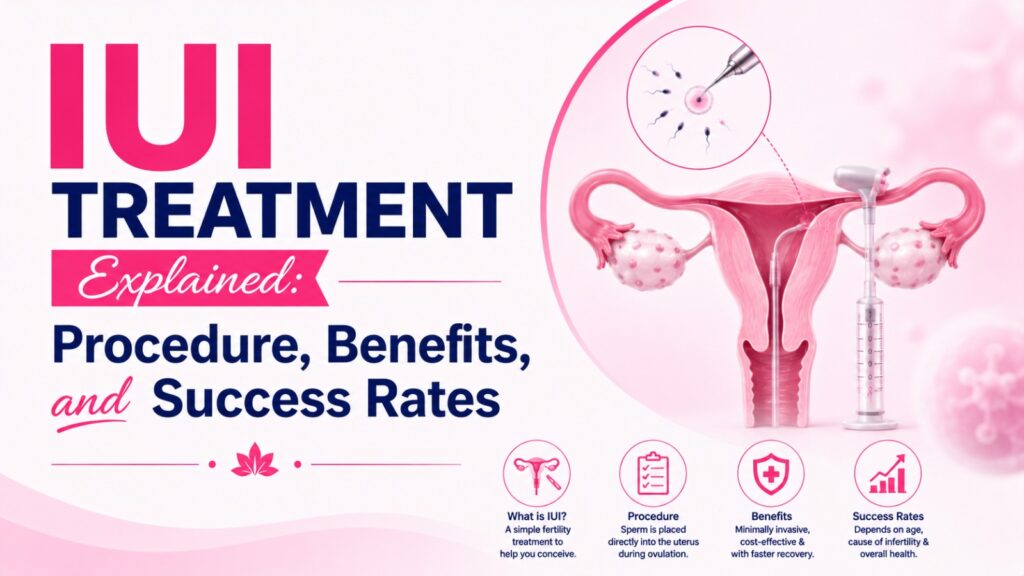
Fertility treatments are full of hope for couples that are unable to conceive naturally. Intrauterine Insemination (IUI) is one of the least invasive fertility procedures and most widely recommended. It is the first step in reproductive procedures for couples and individuals that want a safe, effective, and affordable option.
Knowing the details of IUI treatment, the benefits, and the success factors will help the patient when making important decisions. With advanced diagnosis, personalized treatment, and their skilled fertility specialists, Vrinda Fertility has become a trusted name for couples with fertility concerns.
What is IUI Treatment?
During ovulation, the healthy, prepared sperm is placed directly in the uterus when an Intrauterine Insemination (IUI) procedure is performed. This procedure is one of the more simple and effective ways to help assist in the fertilization process.
Who is an Ideal Candidate for IUI?
Intrauterine Insemination is a recommended procedure for couples and individuals that may have a minor infertility challenge, including, but not limited to:
– Low sperm count/reduced sperm motility
– Unexplained infertility
– Ovulation disorders
– Issues with cervical mucus
– Mild endometriosis
– Donor sperm
– Single women or same-sex female couples who want to become pregnant
Fertility specialists usually do a full fertility assessment to see if IUI is an appropriate treatment before recommending IUI.
The IUI Procedure: Step-by-Step
Knowing what is involved in the process can help ease nerves and let patients know how to get ready.
1. Initial Fertility Assessment
This involves a full assessment of the fertility of both partners, which may include:
– Hormone blood tests
– Ultrasounds
– Tests to see if ovulation is occurring
– Semen analysis
– Assessment of the Fallopian tubes
These tests also offer insight to the likelihood of success of the IUI.
2. Ovulation in IUI
Careful monitoring of the ovulation cycle of the woman occurs via Ultrasound and Hormone Tests. Some women may be given Fertility Drugs.
3. Sperm Collection
On the day of the procedure, a sample of semen is collected, and a special laboratory procedure called “sperm washing” is done, which discards the majority of the semen and collects the most motile sperm.
4. Insemination
Prepared sperm is gently placed into the uterus during the time of ovulation via a thin, flexible catheter. The whole procedure takes mere minutes and typically causes little to no discomfort.
5. Pregnancy Test
About two weeks following IUI, a blood test is done on the patient to see if she is pregnant. The test will show a rising hCG level if implantation has occurred.
Benefits of IUI Treatment
There are many benefits of IUI that make it a highly suggested treatment for couples trying to conceive.
Minimally Invasive
IUI is a non-surgical treatment and does not need patients to be put under anesthesia or admitted to a hospital.
Cost-Effective
IUI is more affordable than IVF and is thus more accessible to couples.
Short Recovery Time
IUI patients can return to their normal, daily routines right after the procedure.
Natural Fertilization
IUI helps sperm fertilize the egg via natural conception that occurs inside the patient’s body.
Lower Physical and Emotional Stress
Due to the simplicity and low invasiveness of the procedure, IUI patients have lower physical and emotional stress levels than patients undergoing other fertility treatments.
IUI Success Rates
One of the most common inquiries about IUI treatment is how successful the procedure is. The success of IUI is dependent on many factors, including:
– Age of the Woman
– Quality of the Egg
– Quality of the Sperm
– Cause of Infertility
– Overall Reproductive Health
– Fertility Medications
Success rates for IUI are generally as listed:
| Age Group | Average Success Rate Per Cycle |
| ————– | —————————–: |
| Under 35 years | 15–20% |
| 35–37 years | 10–15% |
| 38–40 years | 8–10% |
| Above 40 years | 5% or lower |
If pregnancy has not been achieved after 3–6 IUI cycles, then some fertility specialists recommend that patients try IVF next.
Factors That Improve IUI Success
A few different factors need to be considered when discussing how the success rate of IUI can be improved.
Proper Ovulation Timing
Timing is crucial for the success of any fertilization. Having proper ovulation timing can improve chances of success.
Staying Healthy
IUI success rates can improve when the woman has a healthy lifestyle. Healthy weight, smoking cessation, and a good diet can help.
Sperm Preparation
Sperm washing has been developed and provides better results for IUI.
Fertility Specialists
Fertility specialists provide individualized care that can be the deciding factor for the success of the procedure.
Is IUI Painful?
The majority of the people describe the procedure of IUI to be quick and comfortable. IUI takes less than ten minutes to complete and is done without any sort of anesthesia. Because of this, the only feelings that people describe IUI to produce are associated with mild cramps that are similar to those experienced during a period.
What are the Risks of IUI?
The main risks associated with IUI are:
– An infection (rare)
– Mild spotting
– Temporary cramping
– Multiple pregnancy (when using fertility medications)
The fertility team are highly skilled and monitor these risks with care every cycle.
Why Choose Vrinda Fertility for IUI?
The selection of the fertility center is an important milestone for the couple wishing to become parents. Vrinda Fertility is an evidence based, experienced, and modern fertility facility that uses advanced reproductive technologies.
In short, the personalized plans, the specialists, the diagnostics, the modern labs for embryology and andrology, and transparent treatment are the highly regarded factors for improvement in the success of IUI treatment from our center.
– Support for patients that maintains a high level of care, compassion, and respect for the individual throughout the different phases of treatment.
– Visionary and purpose-led fertility treatment.
From the first meeting, through the pregnancy test, and the post pregnancy test visit, the team at Vrinda Fertility works to provide solutions that meet the specific requirements of the patient.
Getting ready for an IUI Cycle
IUI patients can put themselves in the best position for IUI by:
– Taking medication as instructed
– Going to all the monitoring appointments
– Eating healthy
– Reducing stress and incorporating techniques for relaxation
– Getting enough rest
– Not drinking alcohol or smoking
– Talking to their specialist about any issues or concerns
Success of treatment is greatly enhanced by preparation and monitoring as required.
CONCLUSION
IUI provides a more effective, easy, and safe choice for accessible fertility treatment.
It is ideal for a first-line fertility treatment as it enhances the likelihood that the sperm will successfully make it to the egg.
IUI’s effectiveness relies on a correct diagnosis, optimum monitoring, accurate timing and planning customized treatment. With the combination of the latest advancements in reproductive technologies, dedicated caring staff, and highly skilled fertility specialists, Vrinda Fertility offers a supportive environment to potential new parents.
If you are looking for fertility treatment, getting in touch with a specialist is important to understand if IUI is the best choice while taking into consideration your comprehensive reproductive status and goals.