
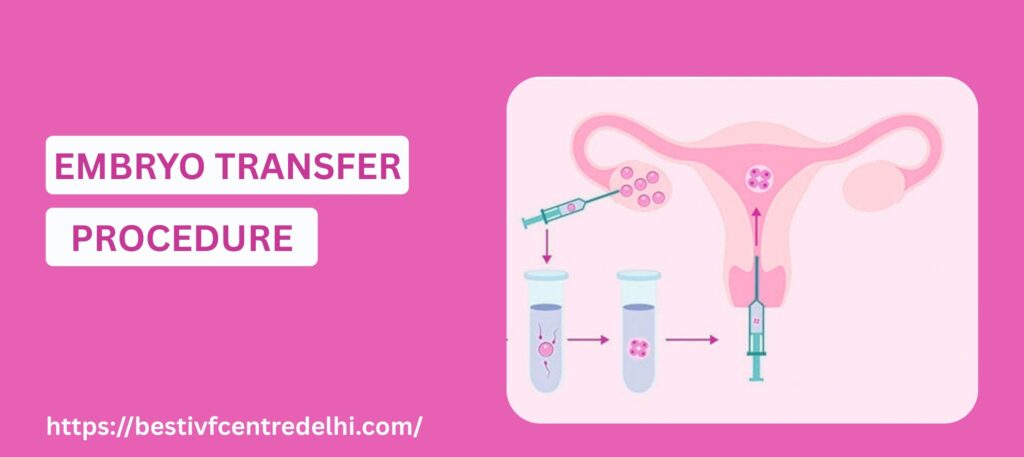
The embryo transfer procedure is the final step of the IVF cycle where one or more fertilized embryos are placed into the woman’s uterus using a thin, flexible catheter.
This is a painless, non-surgical procedure performed under ultrasound guidance to ensure correct placement.
When Does Embryo Transfer Happen? (Timeline)
After egg retrieval and fertilization, the embryo is cultured in the lab for 3 to 5 days. Depending on embryo quality and clinic protocol, the transfer is done as:
- Day 3 transfer (cleavage-stage embryos)
- Day 5 transfer (blastocyst transfer – higher success)
Your fertility specialist chooses the best option based on medical history and embryo development.
Types of Embryo Transfers in IVF
1. Fresh Embryo Transfer
Embryos are transferred in the same cycle as egg retrieval.
2. Frozen Embryo Transfer (FET)
Embryos are frozen (cryopreserved) and transferred in a later cycle.
Benefits: better uterine environment, higher success for many patients.
3. Single Embryo Transfer (SET)
Recommended to reduce risks of multiple pregnancy.
4. Multiple Embryo Transfer
Done in certain cases such as repeated IVF failures or poor embryo quality.
How to Prepare for an Embryo Transfer?
Medical Preparation
- Hormonal medications to thicken the endometrium
- Ultrasounds to check lining thickness
- Blood tests to monitor hormones
- Proper timing of progesterone supplementation
Lifestyle Preparation
- Avoid caffeine and alcohol
- Stay stress-free
- Eat light, nutrient-rich meals
- Maintain good hydration
Step-by-Step Embryo Transfer Procedure
Below is the detailed, patient-friendly breakdown:
1. Brief Counseling & Consent
The doctor explains the process, embryo quality, and number of embryos to be transferred.
2. Embryo Selection
Embryologists choose the best-quality embryo(s) using grading or AI-based embryo assessment technologies.
3. Ultrasound-Guided Transfer
- You lie comfortably on the procedure table.
- The doctor uses abdominal ultrasound for accurate placement.
4. Catheter Insertion
A thin catheter is passed smoothly through the cervix into the uterus.
5. Embryo Placement
Embryos are gently released into the uterine cavity.
6. Post-Procedure Rest
You rest for 20–30 minutes before leaving the clinic.
Is the procedure painful?
No—it’s generally painless and does not require anesthesia.
What Happens After the Embryo Transfer?
Post-Transfer Care Tips
- Continue progesterone medications
- Avoid heavy exercise
- No hot baths or saunas
- Avoid lifting heavy objects
- Prioritize rest and a positive mindset
Pregnancy Test Timeline
A beta hCG blood test is done 10–14 days after the transfer to confirm pregnancy.
Embryo Transfer Success Rate
Success depends on:
- Woman’s age
- Quality of embryos
- Endometrial thickness
- Fertility clinic expertise
- Lifestyle and health conditions
- Type of transfer (Fresh vs FET)
On average, blastocyst transfers (day 5) have higher success—often 50–60% per cycle for women under 35.
Clinics like Vrinda Fertility follow advanced protocols to maximize implantation rates.
Common Symptoms After Embryo Transfer
Normal symptoms include:
- Light cramping
- Spotting
- Bloating
- Breast tenderness
- Mild nausea
These may be due to progesterone, not necessarily pregnancy—so don’t worry!
Possible Risks or Complications
Although rare, risks include:
- Multiple pregnancy (twins/triplets)
- Ectopic pregnancy
- Embryo implantation failure
Choosing an experienced IVF clinic significantly reduces these risks.
Cost of Embryo Transfer in India
The cost varies depending on the clinic and type of transfer:
- Fresh Embryo Transfer: ₹15,000 – ₹30,000
- Frozen Embryo Transfer: ₹25,000 – ₹50,000
This is usually part of the overall IVF package.
FAQs on Embryo Transfer Procedure (Schema-Friendly)
1. Is embryo transfer painful?
No, it’s a quick and painless procedure for most women.
2. How long does the embryo transfer take?
Around 10–15 minutes.
3. How many embryos should be transferred?
Usually one high-quality embryo (SET). More only in selected cases.
4. Can I travel after the transfer?
Light travel is okay, but avoid long journeys and physical strain for a few days.
5. What should I eat after embryo transfer?
Include protein-rich foods, healthy fats, leafy greens, and avoid junk food.
6. How soon can symptoms of pregnancy appear?
Most women feel symptoms 7–10 days after transfer, but the only confirmation is the beta hCG test.
7. Does bed rest improve success?
Scientific studies show normal activity is better than strict bed rest.
Conclusion: Your Path to IVF Success Starts with the Right Guidance
The embryo transfer procedure is a milestone step that brings couples closer to parenthood. With the right preparation, expert embryology, and an experienced fertility clinic like Vrinda Fertility, your chances of successful implantation and pregnancy can significantly improve.
If you’re considering IVF or want a personalized consultation, choosing a trusted center with high success rates and patient-centric care can make all the difference.