
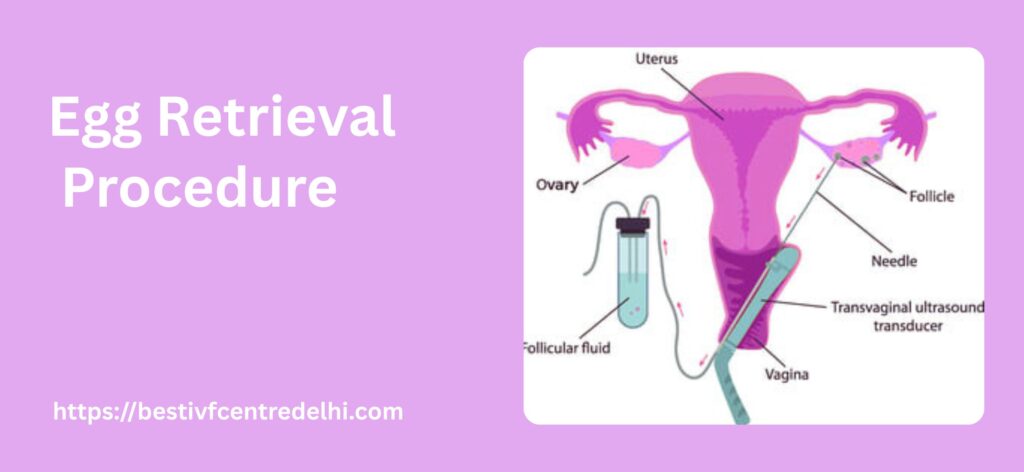
Egg retrieval procedure is a short, minor surgical procedure performed under sedation to collect mature eggs from your ovaries after ovarian stimulation.
Objective:
To safely extract high-quality eggs for fertilization through ICSI/IVF.
Other Names:
- Ovum Pick-Up (OPU)
- Oocyte Retrieval
- Follicular Aspiration
Why Is Egg Retrieval Important in IVF?
Egg retrieval is the central bridge between ovarian stimulation and fertilization. Without retrieving good-quality eggs, IVF cannot proceed.
It helps:
- Collect multiple mature eggs
- Improve fertilization chances
- Increase embryo formation
- Boost overall IVF success rate
How to Prepare for Egg Retrieval
Preparation ensures optimal egg quality and a smooth procedure.
1. Follow stimulation medications strictly
Daily injections help follicles grow.
2. Trigger shot timing is crucial
The hCG or GnRH agonist trigger is given exactly 34–36 hours before retrieval.
3. Fasting before procedure
You must stay fasting (6–8 hours) because anesthesia is used.
4. Avoid perfumes, lotions & makeup
IVF labs require sterile, chemical-free environments.
5. Arrange transportation
You cannot drive after sedation.
6. Wear loose, comfortable clothing
To help reduce post-procedure pressure.
Step-by-Step Egg Retrieval Procedure (Explained Simply)
The egg retrieval procedure at Vrinda Fertility is smooth, well-monitored, and typically painless.
Step 1: Arrival & Pre-Procedure Assessment
- You’ll arrive at the fertility center 30–60 minutes before the procedure.
- Vitals are checked (BP, pulse, oxygen).
- Consent forms are reviewed.
- The anesthetist prepares you for conscious sedation.
Step 2: Mild Sedation/Anesthesia
You are given light IV sedation so you remain comfortable, relaxed, and pain-free.
You will not feel anything.
Step 3: Ultrasound-Guided Follicle Aspiration
- A thin needle is passed through the vaginal wall.
- Each follicle is aspirated carefully.
- Fluid from each follicle is passed immediately to the embryologist.
Step 4: Egg Identification in the Lab
Embryologists examine follicular fluid under a microscope to locate and collect eggs.
Step 5: Counting & Grading of Eggs
The total number of eggs retrieved is recorded.
Mature eggs are identified for IVF/ICSI.
Step 6: Rest & Recovery (30–45 minutes)
You are shifted to a recovery room.
Mild cramping or pressure is normal.
Total time: 20–30 minutes for procedure, 30–45 minutes recovery.
Is Egg Retrieval Painful?
No.
Most women feel nothing during the procedure because of sedation.
Afterward, you may feel:
- Mild cramping (like period pain)
- Slight bloating
- Light spotting
These symptoms usually settle within 24–48 hours.
How Many Eggs Are Retrieved (Average)?
The number depends on your age, ovarian reserve, stimulation protocol, and health.
Average Egg Count by Age:
- 20–30 years: 10–20 eggs
- 30–35 years: 8–15 eggs
- 35–40 years: 5–12 eggs
- 40+ years: 1–5 eggs
Even retrieval of 4–6 eggs can lead to successful pregnancy.
What Happens to Eggs After Retrieval?
Once eggs are retrieved:
. Mature eggs are selected
(MII eggs)
2. Sperm sample is collected
3. Eggs undergo either:
- ICSI (most common)
- IVF conventional fertilization
4. Embryo development is monitored for 3 to 5 days
5. Embryos are transferred or frozen
Possible Risks of Egg Retrieval (Rare but Important)
Egg retrieval is very safe when done at experienced IVF centers.
Very rare risks:
- Infection (<1%)
- Vaginal bleeding
- Ovarian hyperstimulation syndrome (OHSS)
- Reaction to anesthesia
At Vrinda Fertility, strict monitoring dramatically reduces the risk of OHSS or complications.
Aftercare: What to Expect After Egg Retrieval
Rest for the day
Avoid driving for 24 hours
Drink plenty of water
Avoid intercourse for 5–7 days
Expect mild bloating and spotting
If you feel severe pain, heavy bleeding, or fever—contact your fertility doctor immediately.
When Will the Next IVF Step Start?
The next steps depend on your protocol:
Fresh Cycle:
Embryo transfer in 3–5 days.
Frozen Cycle:
Embryo transfer in the next or future menstrual cycle.
Why Choose Vrinda Fertility for Egg Retrieval?
Vrinda Fertility ensures:
- Highly experienced reproductive specialists
- State-of-the-art embryology labs
- Safe anesthesia protocols
- Minimal discomfort
- Excellent egg recovery rates
- Personalized IVF stimulation plans
- GEO-optimized services for Delhi NCR & North India
Your comfort, safety, and success are the center’s top priorities.
FAQs (Schema-Friendly )
Q1. Is egg retrieval safe?
Yes. It is a safe, short procedure performed under sedation with minimal risks.
Q2. How long does egg retrieval take?
The procedure takes around 20–30 minutes, plus 30 minutes recovery time.
Q3. Can I go to work the next day?
Yes, most women return to routine work the next day.
Q4. How many eggs are needed for IVF?
Typically, 8–15 eggs provide the best chances, but even fewer can be enough.
Q5. Will egg retrieval affect future fertility?
No. It does not reduce your natural fertility or egg reserve.
Q6. When can I try intercourse after egg retrieval?
Avoid intercourse for 5–7 days.
Conclusion
The egg retrieval procedure is a smooth, safe, and essential part of the IVF journey. With expert doctors, modern technology, and personalized stimulation protocols, women can expect a comfortable experience and excellent outcomes.
At Vrinda Fertility,their team ensures compassionate care, high-quality egg retrieval, and maximum support at every step—making your IVF journey smoother and more successful.
If you or someone you know is planning IVF, understanding the egg retrieval process helps reduce anxiety and improves your confidence during treatment.